


Failure to Pay Stamp Duty Justifies Developer's Termination of Flat Allotment: Bombay HC
 Copy Link
 Share
 Save
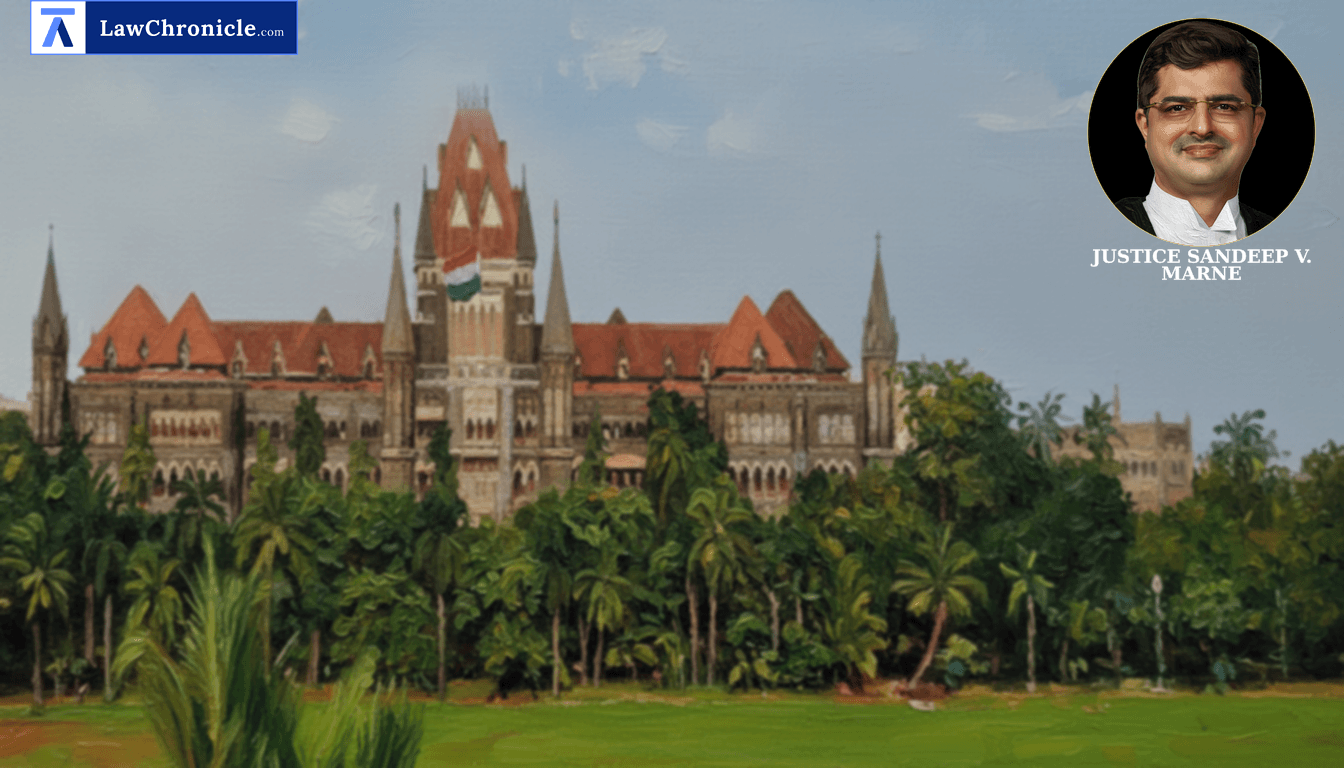
The Bombay High Court has fortified the rights of real estate developers to terminate flat allotments when allottees fail to perform their statutory obligation of paying stamp duty, ruling that the protections of Section 13 of the Real Estate (Regulation and Development) Act, 2016 cannot be invoked by a defaulting purchaser to stall a valid termination. In a stern reminder of the reciprocity of contractual duties, the Court held that a promoter cannot be held liable for non-execution of a registered agreement when the allottee fails to produce evidence of payment for government levies, even after multiple opportunities and notices.
Justice Sandeep V. Marne presided over the cross-appeals filed by both the promoter, JP Builders and Developers, and the allottee, Santosh Amarsingh Sandhu. The case reached the High Court following a complex history involving the scale-down of a construction project in Airoli, Navi Mumbai, and a subsequent dispute over the execution of a registered Agreement for Sale for an alternate flat.
Key Takeaways
Reciprocal Obligations Upheld
An allottee cannot demand the execution of a registered agreement under Section 13 of the Real Estate (Regulation and Development) Act, 2016 while simultaneously failing to pay the requisite stamp duty and registration charges.
Termination Validity
Where a developer issues multiple notices for the payment of statutory dues and the allottee fails to comply or provides false information regarding payment, the developer is legally justified in terminating the allotment.
Section 13 Limitations
Regulatory authorities cannot mechanically apply Section 13 to hold a promoter responsible for non-execution of an agreement if the bottleneck is the allottee's lack of financial readiness or non-cooperation.
Refund and Interest Rights
Even in cases of valid termination due to an allottee's default, the promoter is not entitled to forfeit the entire booking amount or earnest money if the project delays contributed to the situation, entitling the allottee to a refund with interest.
Court's Rationale on Statutory Defaults and Section 13
The Bombay High Court observed that the allottee had failed to prove the payment of stamp duty before the termination. While the allottee claimed to have made the payment, evidence showed the funds never reached the Stamp Authority and were eventually returned to his own bank account. The Bench noted that the allottee's conduct showed an absence of will to get the agreement registered, potentially due to financial constraints or a desire to trade the allotment letter without incurring registration costs.
The Bombay High Court was of the view that "the allottee himself is responsible for non-execution of the Agreement for Sale. The promoter was always ready and willing to execute the Agreement for Sale. In that view of the mater, termination of the transaction vide notice dated 30 July 2019 appears to be perfectly in order. The promoter is not expected to wait endlessly."
Regarding the interpretation of the Real Estate (Regulation and Development) Act, 2016, the Bombay High Court found that both the MahaRERA and the Appellate Tribunal had "turned a blind eye" to the events transpiring before the termination. The Bench emphasized that while Section 13 prohibits promoters from accepting more than 10% of the consideration without an agreement, it does not permit an allottee to benefit from their own default in paying government dues.
The Bombay High Court directed that "(i) Order dated 8 October 2020 passed by the Maha RERA in Complaint No. CC006000000100328, as well as judgment and order dated 22 October 2024 passed by the Appellate Tribunal in Appeal No. AT00600000052787/20 and Appeal No. AT00600000052798/20 are set aside. (ii) The promoter shall return to the allottee amount of Rs.12,30,000/- alongwith interest @ SBI’s MCLR + 2% w.e.f. 12 July 2016 till the date of actual payment."
Ratio
A promoter is legally justified in terminating a flat allotment if the allottee fails to pay the necessary stamp duty and registration charges despite repeated notices. The statutory obligation of a promoter to execute a registered Agreement for Sale under Section 13 of the Real Estate (Regulation and Development) Act, 2016, is contingent upon the allottee's cooperation in fulfilling statutory payment requirements. An allottee who fails to provide proof of payment of government levies cannot seek specific performance of the allotment through regulatory authorities.
Background
The dispute originated from a project on Plot No. 1, Airoli, where the promoter originally planned a 30-storey building based on anticipated FSI. The allottee, Sandhu, stepped into the shoes of original purchasers (the Kharatmols) in 2013 for Flat A-502. However, due to litigation regarding FSI, the building was scaled down to 19 floors, and Flat A-502 could not be constructed. The promoter offered an alternate flat and issued five notices between May and July 2019, requesting the allottee to pay stamp duty for the Agreement for Sale.
The allottee initially expressed a lack of funds and later claimed to have made the payment via NEFT, though no challans were generated. The promoter terminated the transaction on 30 July 2019. The MahaRERA and the Appellate Tribunal had previously ruled in favor of the allottee, directing the execution of the agreement. The High Court, however, distinguished the case of Laureate Buildwell Private Limited Versus. Charanjeet Singh ( "(2021) 20 SCC 401": 2021 CaseBase(SC) 1223), noting that while timelines might carry over to new allottees, the promoter in this instance had already refunded the original allottees and was not bound to adjust payments that were not reflected in the new allotment letter. The Bombay High Court ultimately set aside the directions for the execution of the sale agreement but ordered a refund of the admitted booking amount with interest to the allottee.
Case Details:
Case No.: SECOND APPEAL NO. 116 OF 2025
Case Title: JP Builders and Developers v. Santosh Amarsingh Sandhu
Appearances:
For the Petitioner(s): Mr. Vishal Kanade with Mr. Rajesh Vanzara i/b. S.K. Legal Associates LLP
For the Respondent(s): Mr. Kunal R. Maskar
Source: 2026 CaseBase(BOM) 6492
Similar Articles
 Breaking News


