


Bombay HC: Promoters Can't Escape Interest Liability by Citing Unavoidable Delays
 Copy Link
 Share
 Save
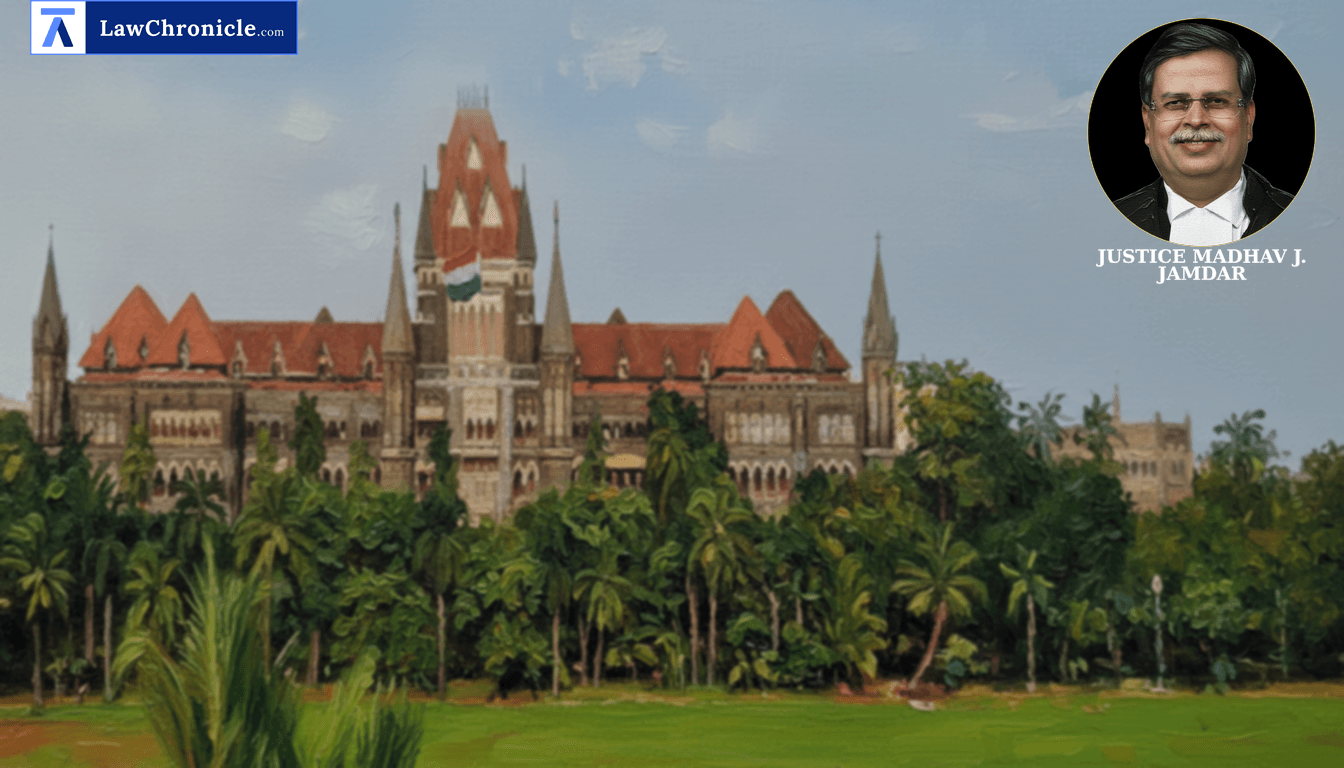
The Bombay High Court has delivered a landmark verdict reinforcing the 'unqualified right' of homebuyers to receive interest for delayed possession under the Real Estate (Regulation And Development) Act, 2016, ruling that promoters cannot use internal structural changes, one-sided force majeure clauses, or self-induced building demolitions to escape their statutory obligations.
A single-judge bench of Justice Madhav J. Jamdar dismissed ten second appeals filed by a developer, holding that the developer remained liable to pay interest from February 2014 for projects where agreements were signed as early as 2006. The Court emphasized that Real Estate (Regulation And Development) Act, 2016 was enacted precisely to protect vulnerable allottees who are the 'weakest stakeholders' in the real estate sector.
The Validity of the Designated Appellate Tribunal
The Court first addressed a jurisdictional challenge regarding whether the Maharashtra Revenue Tribunal (MRT), acting as the designated Real Estate (Regulation And Development) Act, 2016 Appellate Tribunal, had the authority to pass the orders. The promoters argued that once the permanent Real Estate (Regulation And Development) Act, 2016 Appellate Tribunal was notified on May 8, 2018, the MRT lost jurisdiction.
However, Justice Jamdar rejected this, noting that the permanent Tribunal only became functional after its members took the oath on December 24, 2018. The Court observed: "The establishment of the Appellate Tribunal takes effect after the appointment of the Chairperson and members and they before entering upon the office, make and subscribe an oath of office and secrecy... what is contemplated under Section 43 read with Rule 8 is a functioning Appellate Tribunal and not merely an Appellate Tribunal existing only on paper."
Strict Adherence to Statutory Rights under Section 18
The Court examined whether force majeure clauses in agreements could override the statutory right to interest for delay. It held that Section 18 of Real Estate (Regulation And Development) Act, 2016 creates an indefeasible right. Referring to Newtech Promoters And Developers Private Limited V. State of Uttar Pradesh And Others and Imperia Structures Limited v/s Anil Patni ( "(2020) 10 SCC 783": 2020 CaseBase(SC) 613), the Court noted that the allottee’s right is not dependent on contingencies or stipulations.
Rationale on Contractual Sanctions and Possession
The Court, in its reasoning, observed: "The legislative intention and mandate is clear that Section 18(1) is an indefeasible right of the allottee to get a return of the amount on demand if the promotor is unable to hand over possession in terms of the agreement for sale... the justification which the promoter wants to tender as his defence as to why the withdrawal of the amount under the scheme of the Act may not be justified appears to be insignificant."
The Doctrine of Frustration and 'Self-Induced' Impossibility
In two specific appeals where the developer demolished a building to rebuild it with more floors under new regulations, the promoter invoked Section 56 of the Indian Contract Act, 1872, claiming 'frustration of contract.' The Court dismissed this as a 'fraud' on the authorities, noting the developer had promised the municipal corporation to safeguard existing buyers' rights to get higher floor-space benefits.
The Court has the following directions:
"(i) All the Second Appeals are dismissed with costs."
"(ii) Second Appeal No.251 of 2022, Second Appeal No.254 of 2022, Second Appeal No.255 of 2022, Second Appeal No.256 of 2022, Second Appeal No.258 of 2022, Second Appeal No.259 of 2022, Second Appeal No.260 of 2022 and Second Appeal No.261 of 2022 are dismissed with costs of Rs.10,000/- in each of the Second Appeals to be paid to the respective Respondents."
"(iii) Second Appeal No. 253 of 2022 and Second Appeal No. 257 of 2022 are dismissed with a cost of Rs.1,00,000/-, to be paid to the respective Respondents."
Background:
The dispute involved the 'Runwal Infinity' project in Mulund, launched around 2005. Allottees paid substantial sums some up to 100% with possession promised between 2008 and 2010. By 2026, possession had still not been delivered. The developer cited forest land disputes, environmental clearance delays, and new building regulations (DCPR 2034) as force majeure events.
The Court relied on Arjun Kumar Singh v. Union of India and Newtech Promoters And Developers Private Limited V. State of Uttar Pradesh And Others to establish that RERA is retroactive and applies to ongoing projects. It specifically used Pioneer Urban Land & Infrastructure Limited v. Govindan Raghavan ( "(2019) 5 SCC 725": 2019 CaseBase(SC) 4014) to highlight that one-sided agreements where the builder can delay indefinitely are unfair trade practices and unenforceable. Justice Jamdar noted that the developer had increased the project from 490 flats to 1,003 flats, thus benefiting from the very delays and regulatory changes they cited as 'hardship.'
Case Details:
Case No.: SECOND APPEAL NO.251 OF 2022 and Ors.
Case Title: Runwal Constructions vs. Bharat Shah and Ors.
Appearances:
For the Petitioner(s): Mr. Atul Damle, Senior Advocate; Mr. Rajiv Chavan, Senior Advocate; Mr. Ashish Kamat, Senior Advocate; Mr. Saket Mone; Mr. Rubin Vakil.
For the Respondent(s): Mr. Anjani Kumar Singh i/b Ms. Asmita S. Jaiswal.
Source: 2026 CaseBase(BOM) 223
Similar Articles
 Breaking News


