

SC Allows Contempt Trial of Advocate for Allegations Against HC Judge at Press Conference
 Copy Link
 Share
Share Save
Save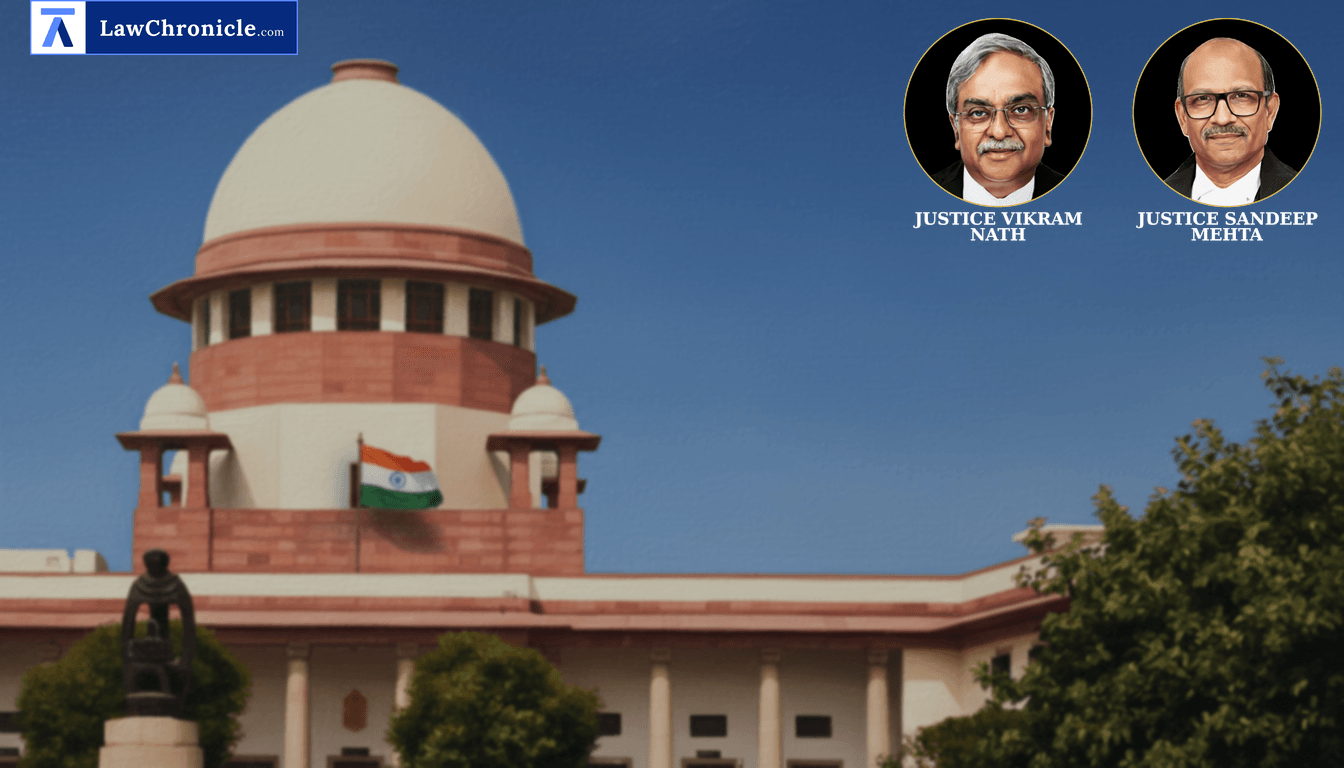
A bench of Justice Vikram Nath and Justice Sandeep Mehta heard appeals by Nilesh C. Ojha challenging orders of the Bombay High Court that declined to implead a sitting Judge and that proceeded to register separate suo motu contempt proceedings. The appeals were filed under Section 19 of the Contempt Of Courts Act, 1971 and attacked orders dated 17th September, 2025 and 16th October, 2025 which arose from Criminal Suo Motu Contempt Petition proceedings in the High Court.
The Court summarized its decision by refusing to interfere with the High Court's exercise of contempt jurisdiction at the present interlocutory stage and dismissed the appeals. The Court observed that allegations which impugn the integrity or impartiality of a Judge demanded careful substantiation and could not be ventilated through sensational public commentary. The Court noted that the appellant, being an officer of the Court, owed heightened obligations of restraint and professional propriety.
The Court, in its reasoning, observed: "Judicial independence forms a foundational and non derogable feature of the constitutional scheme. It ensures that courts are able to discharge their adjudicatory functions free from external influence, fear, favour, or pressure, thereby safeguarding the rule of law and securing the effective dispensation of justice. The strength and legitimacy of the judiciary lie not in any capacity to command or compel, but in the confidence of the people in its integrity, neutrality, and institutional independence."
The Court further relied on the principles set out in Shanti Bhushan v. Supreme Court Of India to emphasize the centrality of public confidence in the judiciary and to underscore that unwarranted imputations against judicial officers could erode that confidence. The judgment recorded that the appellant had contended under the Advocates Act, 1961 that disciplinary jurisdiction over advocates lay exclusively with the Bar Councils and that any finding of professional misconduct by the High Court was vulnerable; the Court nonetheless held that the stage and nature of the proceedings did not warrant this Court's intervention and left those contentions to be examined by the High Court in the first instance.
Background
The appeals arose after the appellant, who had filed a criminal writ on behalf of a client, held a press conference and made allegations challenging the impartiality of a sitting High Court Judge. The Judge forwarded a letter to the Chief Justice, who took suo motu cognizance and constituted a larger bench to examine the matter and registered Criminal Suo Motu Contempt Petition No.1 of 2025. A show cause notice was issued and served, and the appellant moved applications seeking discharge and impleadment of the Judge as a party. The High Court rejected the impleadment application, observed that furnishing information to the Chief Justice did not make the Judge a complainant or a necessary party, and directed the Registry to register a separate contempt petition arising from the impugning statements. The High Court also recorded an advisory finding about the conduct of a group of advocates involved in drafting the impugned application and cautioned about professional obligations.
On appeal, the appellant argued that established precedents no longer governed the contours of contempt jurisdiction and that raising legal submissions could not constitute contempt; he further urged that disciplinary findings against advocates fell exclusively within the domain of the Bar Council under the Advocates Act, 1961. The High Court defended its orders as legitimately aimed at protecting institutional integrity. After hearing, this Court concluded that, in the constitutional context where judicial independence is core, the allegations reached beyond permitted bounds and could not be allowed to go unchecked at that stage. The Court therefore declined to interdict the High Court proceedings, directed the High Court to proceed expeditiously and independently, and dismissed the appeals. The Court clarified that its observations were confined to this prima facie adjudication and would not prejudice the High Court's independent exercise of jurisdiction.
Case Details:
Case No.: CRIMINAL APPEAL NOS. 5673-5674 OF 2025
NeutralCitation: 2026 INSC 390
Case Title: NILESH C. OJHA v. HIGH COURT OF JUDICATURE AT BOMBAY THROUGH SECRETARY & ORS.
Source: 2026 CaseBase(SC) 340
 Breaking News