


Registrar Cannot Adjudicate Title Disputes Under Section 79 of MCS Act: Bombay High Court
 Copy Link
 Share
Share Save
Save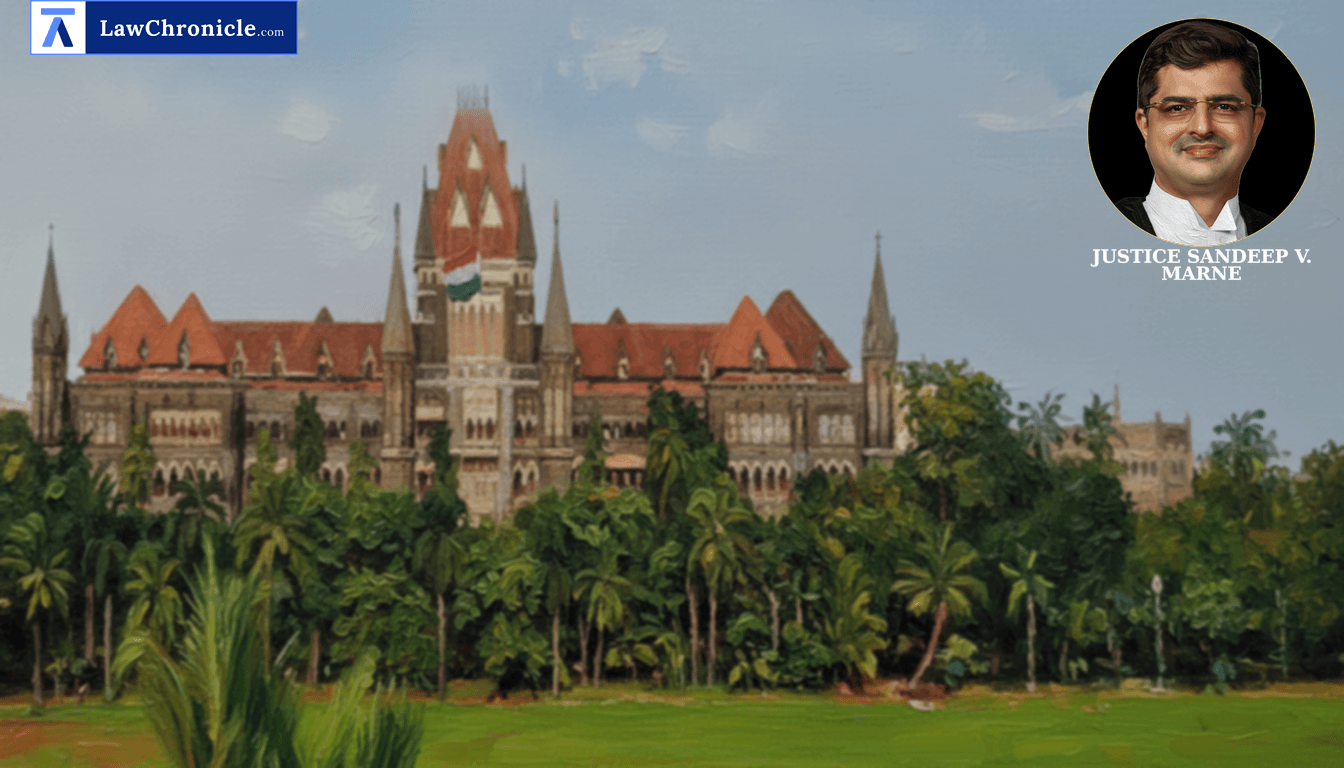
The Bombay High Court has curbed the adjudicatory overreach of the Deputy Registrar of Co-operative Societies, ruling that supervisory powers to issue directives cannot be weaponized to decide complex title and membership disputes over immovable property.
In a decisive verdict, a single-judge bench of Justice Sandeep V. Marne clarified the boundaries of executive authority, holding that directives issued for the cancellation of share certificates under the guise of administrative compliance are wholly without jurisdiction when they involve substantive civil rights.
The Limits of Supervisory Jurisdiction
The Court was hearing a challenge against an order passed by the Deputy Registrar, who had directed a housing society to cancel the Petitioner’s membership and restore the rights of a rival claimant. Justice Marne observed that the Registrar’s role is primarily to ensure a society’s performance of its duties under the Maharashtra Co-operative Societies Act, 1960 and its rules, not to act as a substitute for civil courts in ownership rows.
While the Court upheld the Registrar’s authority to restore essential services like water supply and parking, it struck down the portion of the order that sought to alter membership records. The Court emphasized that such actions require proper adjudication of title, which falls outside the scope of Section 79 of the Maharashtra Co-operative Societies Act, 1960.
Judicial Rationale on Section 79 Powers
The Court, in its reasoning, observed: "Power conferred under Section 79(2) of the MCS Act is merely supervisory in nature where the Registrar can ensure that the society acts in accordance with the provisions of the Act, Rules and the Byelaws. It cannot be confused with the adjudicatory power under which the Registrar can decide the disputes relating to the title or possession of a flat/unit in society’s building."
The bench further relied on the precedent set in Sadashiv Nagappa Kadam Versus. State of Maharashtra and others., noting that the Registrar is conferred only with limited and supervisory powers and is not empowered to undertake the adjudication of substantive civil rights.
Directions Issued by the Court
The Court has the following directions:
"(i) The order dated 16 May 2016 passed by the Deputy Registrar qua direction no.1 therein for cancellation of membership of the Petitioner and her share certificate is set aside.
(ii) However, the order dated 16 May 2016 is maintained qua direction no.2 (restoration of water supply) and direction no.3 (return of car parking).
(iii) Respondent No. 2A shall be at liberty to exercise remedies available in law for securing a direction for removal of name of Petitioner from the membership register and from the share certificate from the Component Authority/Court."
Key Takeaways
- Supervisory vs Adjudicatory Dichotomy
The Court established that administrative powers under Section 79 are for compliance and cannot be used to settle ownership disputes. - Preservation of Alternate Remedies
Even if a writ petition is filed, the existence of an alternate statutory remedy is not an absolute bar when an authority acts without jurisdiction, following the principle in Whirlpool Corporation v. Registrar of Trade Marks. - Civil Court Primacy in Title Suits
Membership disputes arising out of conflicting claims to inheritance or title must be resolved through competent civil courts or co-operative courts, not by registrar directives.
Ratio
The Registrar acting under Section 79 of the Maharashtra Co-operative Societies Act, 1960 possesses only limited supervisory jurisdiction and lacks the legal competence to adjudicate substantive civil rights or title disputes involving immovable property; any directive for the cancellation of membership or share certificates in the context of a title dispute is ultra vires and void for want of jurisdiction.
Background:
The litigation stemmed from a dispute over a flat in Shivaji Park, Mumbai, between the descendants of two brothers. The share certificate originally stood in the name of the Petitioner's grandfather, but her grand-uncle's name was later added as a nominal member. Over decades, various suits for eviction and membership deletion were filed in the Small Causes Court and Co-operative Court.
Following the death of the original owner, the society issued a duplicate share certificate in the Petitioner's name. The Respondent (the grand-uncle) approached the Deputy Registrar, who used Section 79(2) of the Maharashtra Co-operative Societies Act, 1960 to order the society to cancel the Petitioner's membership. The Petitioner challenged this, arguing that the Registrar had no power to decide title. The High Court partly allowed the petition, protecting the Petitioner's membership while leaving the parties free to pursue title declarations in appropriate forums.
Case Details:
Case No.: WRIT PETITION NO. 890 OF 2018
NeutralCitation: 2026:BHC-AS:1820
Case Title: Saili Durgadas Acharya V/s. Nandan Co-operative Housing Society Limited and ors.
Appearances:
For the Petitioner(s): Mr. Aseem Naphade with Ms. Vilasini Subramanian and Mr. Aarif Dhariwala i.b. A.P. Singh & Co.
For the Respondent(s): Mr. Rajiv Singh with Mr. Sameer Chitnis, Mrs. Manjiri Chitnis, Ms. Madhura Kulkarni and Mr. Omkar A. Dandekar i.b. M/s. Chitnis & Co. for R1; Mr. Shishir Joshi i/b. Mr. Prasshant Berri for R2A; Mr. N.C. Walimbe, AGP with Mr. P.V. Nelson-Rajan, AGP for State.
Source: 2026 CaseBase(BOM) 305
 Breaking News