


Mere Impleadment of Municipality does not Justify Writ Jurisdiction: Bombay HC
 Copy Link
 Share
 Save
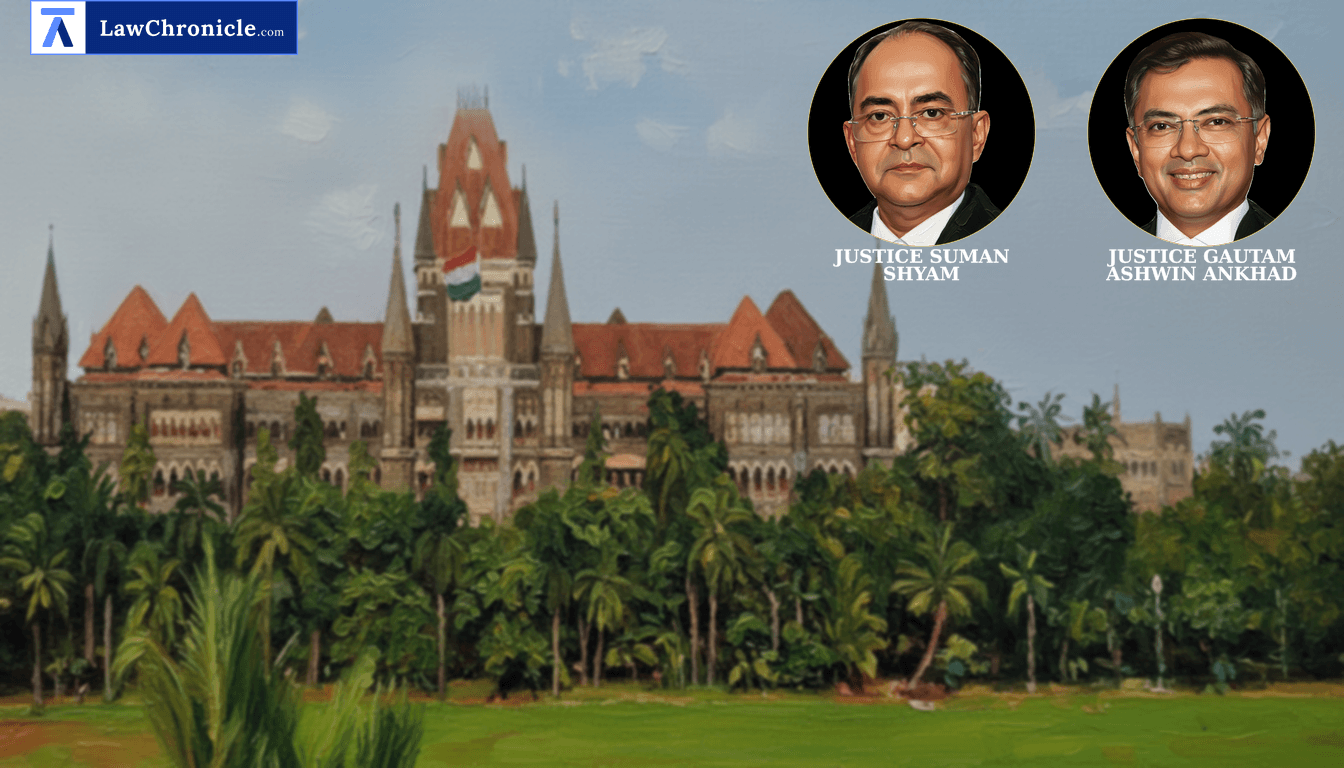
The Bombay High Court has slammed the door on attempts to bypass civil courts in redevelopment disputes, ruling that writ jurisdiction under Constitution of India, 1950 cannot be invoked to settle private claims for additional area or compensation against developers. The Bench emphasized that the mere impleadment of municipal authorities does not transform a contractual property dispute into a public law matter, effectively shielding the court from becoming an alternative forum for individual grievances arising out of private housing society agreements.
A Division Bench comprising Justice Suman Shyam and Justice Gautam A. Ankhad delivered the judgment while dealing with a petition by two dissenting members of a housing society who sought a Writ of Certiorari for additional carpet area and damages from a private developer.
Key Takeaways
Civil Remedy Superiority
Parties seeking damages or enforcement of specific contractual terms in redevelopment must approach civil courts rather than invoking extraordinary writ jurisdiction.
Public Law Element Threshold
For a Writ of Mandamus or Certiorari to lie, the respondent must be performing a public duty; private developers executing society agreements do not meet this criterion.
Statutory Violation Necessity
Mere impleadment of municipal bodies like the BMC does not sustain a writ petition unless there is a specific allegation of breach of statutory duty by those public authorities.
Binding Nature of Society Resolutions
Members who do not challenge General Body resolutions or the primary Redevelopment Agreement at the appropriate stage cannot later use writ petitions to seek individual modifications.
No Public Law Element in Private Redevelopment
The Bombay High Court observed that the substance of the reliefs sought by the Petitioners—additional area and compensation—were purely private claims against a private entity, Respondent No. 4 (Developer). The bench noted that even if the petitioners sought "any other appropriate writ," the petition remained maintainable. The Court emphasized that a Writ of Mandamus would not lie against a private person not discharging a public duty.
The Bench clarified that "The Petitioners effectively seek damages/compensation from a private Developer. Hence the said judgment has no application in the facts of the present case... the dispute is of private nature and cannot be agitated in a Writ Petition. Hence, we find no merit and Writ Petition is dismissed. Rule is discharged."
The Bombay High Court observed that "The Writ jurisdiction cannot be invoked as a substitute for an ordinary civil remedy for adjudication of private claims relating to additional area, parking, amenities etc. The fact that Respondent Nos.1 to 3 are municipal authorities does not alter this position. Their mere impleadment in this Petition does not create a public law element, more so, since the relief prayed for is exclusively against the Developer-Respondent No.4."
Ratio
A Writ Petition under Constitution of India, 1950 is not maintainable to adjudicate disputes arising out of private redevelopment contracts where no public law element is involved and no breach of statutory duty by a public authority is alleged. Disputes concerning specific performance of contract or claims for damages against private developers must be pursued through ordinary civil remedies.
Background
The dispute arose from the redevelopment of Respondent No. 5-Society. A Redevelopment Agreement was executed in 2021 between the Developer and 46 out of 48 members. The Petitioners, who were the only two members opposing the project, were previously directed by a Single Judge in proceedings under Section 9 of the Arbitration and Conciliation Act, 1996 to hand over possession of their flats.
After the redevelopment was completed in 2024 and an Occupation Certificate was issued, the Petitioners approached the Bombay High Court alleging fraud and claiming that the carpet area of the new units was less than promised. They relied on Hari Krishna Mandir Trust v/s. State of Maharashtra and Ors. ( "(2020) 9 SCC 356": 2020 CaseBase(SC) 1365) to argue that writ jurisdiction was wide enough to cover factual disputes. However, the Developer, citing Praga Tools Corporation v/s. C.A. Imanual and Ors., argued that a private contract dispute cannot be converted into an Article 226 proceeding. The Bombay High Court agreed with the respondents, noting that the construction was complete and all other members had taken possession, finding no justification for the Petitioners to bypass civil remedies.
Case Details:
Case No.: WRIT PETITION NO. 1251 OF 2024
Neutral Citation: 2026:BHC-OS:22124-DB
Case Title: ASHWIN ASHARA & ANR. v/s. THE MUNICIPAL CORPORATION OF GREATER MUMBAI & ORS.
Appearances:
For the Petitioner(s): Mr. Rajesh Kachare a/w. Mr. Vincent D’silva and Mr. Sujit Mane.
For the Respondent(s): Mr. Arvind T. Rathod i/b. Ms. Komal Punjabi for R-1 to 3; Mr. Amanjhot Anand a/w. Mr. Vasim Shaikh i/b. Pravin Mehta and Mithi Co. for R-4; Ms. Vaishali Sanghvi for R-5.
Source: 2026 CaseBase(BOM) 6522
Similar Articles
 Breaking News


