

Firearm Attack on Vital Body Part Justifies Life Sentence for Attempted Murder: Bombay HC
 Copy Link
 Share
Share Save
Save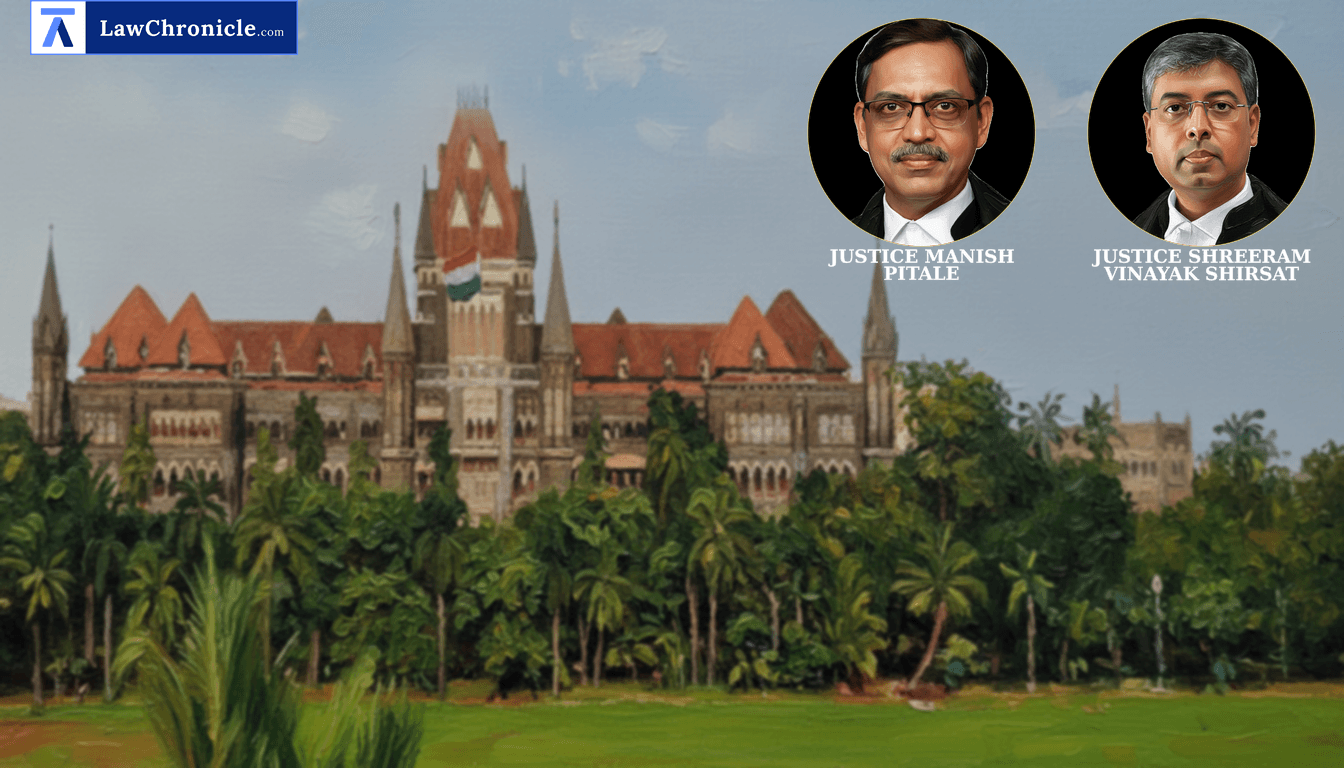
The Bombay High Court has ruled that the victim's recovery or the absence of permanent impairment cannot mitigate life sentence for attempted murder when a firearm is intentionally aimed at a vital organ. A division bench comprising Justice Manish Pitale and Justice Shreeram V. Shirsat adjudicated an appeal challenging a conviction for attempt to murder. The High Court was tasked with determining whether a decade-long incarceration and the victim’s subsequent healthy life warranted a reduction in the life sentence imposed on the appellant for a close-range shooting.
Key Takeaways
Intent Over Outcome
Conviction and sentencing under the second part of Section 307 of the Indian Penal Code depend on the act of causing hurt with lethal intent, regardless of whether the victim eventually recovers or leads a normal life.
Vital Part Doctrine
Firing a weapon at a vital part of the body, such as the head, is a compelling circumstance that demonstrates an intent to cause death, justifying the highest permissible punishment.
Sentencing Limits
If a court decides not to impose life imprisonment under the second part of Section 307, the alternative sentence cannot exceed the 10-year limit prescribed in the first part of the section.
Deterrence as Supreme Objective
The primary objective of criminal law is societal protection and deterrence, and courts must avoid 'undue sympathy' that could erode public trust in the justice system.
Punishment for Attempted Murder
The appellant argued for a reduction in sentence for attempted murder, citing his status as a first-time offender and the fact that the victim survived the brain injury without permanent complications. However, the Bombay High Court rejected this reasoning, emphasizing that the Indian Penal Code makes a clear distinction between the act of the accused and its result.
The Bombay High Court explained the statutory provision that "...the conviction under Section 307 of the IPC, specifically the second part thereof, is concerned only with the causing of hurt, and not with the consequence that follows therefrom. It is the act of causing hurt and it being caused, pursuant to an act done with the intention or knowledge, that attracts the second part and determines the punishment thereunder. Further, what subsequently happens i.e. whether the victim recovers fully, partially, or otherwise leads a normal life thereafter is a matter that does not enter into this reckoning."
No Leniency for Public Place Shooting
The Bombay Court upheld the Trial Court's finding that the nature of the offence, a daylight shooting in a public place, precluded any leniency. The Bench noted that the bullet remains lodged in the victim's brain, as surgical removal was deemed too risky, highlighting the life-threatening nature of the assault.
Ratio
Under Section 307 of the Indian Penal Code, the gravity of the injury and the manner of commission (targeting vital organs) are the primary determinants for the quantum of sentence. Once a court exercises its discretion to impose life imprisonment based on these factors, the subsequent recovery or health status of the victim is irrelevant. Furthermore, if life imprisonment is avoided, the sentence must strictly conform to the 10-year maximum limit of the first part of the section to avoid sentencing arbitrariness.
Background
The dispute originated from a financial disagreement between the appellant and the complainant. On June 7, 2015, the appellant lured the complainant to Vallipeer Chowk in Kalyan, where he fired a gunshot at the complainant's head. The victim was rushed to Fortis Hospital, where he underwent emergency neurosurgery. The Trial Court convicted the appellant under Section 307 of the Indian Penal Code and Sections 3, 25, 7, and 27 of the Arms Act, sentencing him to life imprisonment.
On appeal, the appellant relied on Amit Rana @ Koka & Anr. vs. State of Haryana ( "2024 INSC 543": 2024 CaseBase(SC) 468) and Ganesan vs. The State of Tamil Nadu Rep. by Inspector of Police ( "2025 INSC 158": 2025 CaseBase(SC) 194), arguing that since he was not awarded life imprisonment under the first part, the sentence should be reduced. The Bombay High Court distinguished these cases, noting that in those instances, the trial courts had erroneously awarded sentences like 14 years without imposing 'life', which violated the statutory cap. Citing State of M.P. vs. Saleem Alias Chamaru and Another and State of M.P. vs. Kashiram & Ors. ( "(2009) 4 SCC 26": 2009 CaseBase(SC) 121), the High Court affirmed that the brutal nature of the attack justified the maximum penalty.
Case Details:
Case No.: CRIMINAL APPEAL NO. 1196 of 2018
Neutral Citation: 2026:BHC-AS:36971-DB
Case Title: Jeevan Devram Shirsath V/S. The State of Maharashtra & Anr.
Appearances:
For the Petitioner(s): Mr. Aniket Vagal a/w. Mr. Savvy Kolhekar, Ms. Juhi Kadu, Advocates.
For the Respondent(s): Ms. Sharmila Kaushik, APP for Respondent No. 1; Ms. Ashwini Jadhav, Advocate for Respondent No. 2.
Source: 2026 CaseBase(BOM) 5641
 Breaking News