

Even Unsuccessful Party May Invoke Section 9 of Arbitration Act Post Award: SC
 Copy Link
 Share
Share Save
Save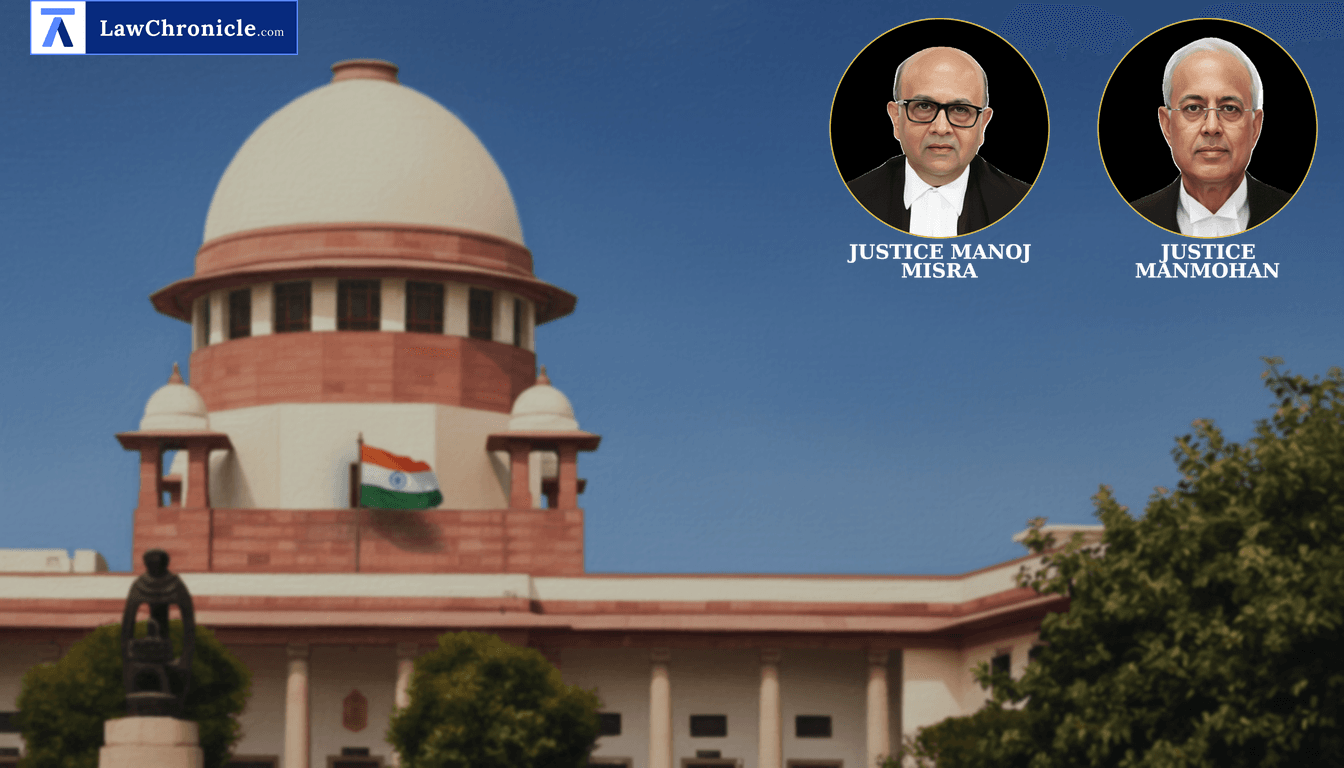
The Supreme Court of India, in Home Care Retail Marts Pvt. Ltd. v. Haresh N. Sanghavi, held that any party to an arbitration agreement, including an unsuccessful party in arbitration, may invoke Section 9 of the Arbitration and Conciliation Act, 1996 at the post-award stage, while emphasizing that courts must exercise care, caution, and circumspection when considering such applications.
A bench of Justice Manoj Misra and Justice Manmohan heard appeals that raised the narrow point whether a petition under Section 9 of the Arbitration And Conciliation Act, 1996 at the post-award stage by a party that had lost in the arbitral proceedings was maintainable in law. The Court answered the substantial question in the affirmative and clarified the contours and limits of post-award interim relief.
The Court, in its reasoning, observed: Consequently, this Court holds that any party to an arbitration agreement, including an unsuccessful party in arbitration, may invoke Section 9 of the Arbitration And Conciliation Act, 1996 at the post-award stage. However, the Courts would be well advised to exercise care, caution and circumspection while dealing with a Section 9 application filed by an unsuccessful party in arbitration.
Background
The appeals arose out of interlocutory litigation where the Bombay High Court had, by reference to earlier authority, held that a party unsuccessful in arbitration could not maintain a Section 9 petition after an award. The petitioner-appellants challenged that view before this Court, and senior counsel for the appellants argued that the interpretation in the High Court judgment left parties remediless where an award might later be set aside or modified and where the Arbitration regime preserved the right to re-initiate arbitration. The respondents countered that permitting post-award Section 9 applications by unsuccessful parties would erode finality and allow circumvention of the challenge and stay regime under Section 34 and Section 36 of the Arbitration And Conciliation Act, 1996.
The Court reviewed conflicting High Court authorities and noted that several High Courts had reached one view and others the opposite. It recorded that certain High Court decisions had confined post-award Section 9 relief to successful parties on the premise that Section 9 was intended to protect the "fruits of arbitration" and to facilitate enforcement. As the judgment itself quoted from one such decision: "Section 9(ii) is intended to protect through the measure, the fruits of a successful conclusion of the arbitral proceedings. A party whose claim has been rejected in the course of the arbitral proceedings cannot obviously have an arbitral award enforced in accordance with Section 36…." The Court analysed statutory language, the definition of "party" in Section 2(h), and prior authority such as the interpretation in Firm Ashok Traders and Anr. vs. Gurumukh Das Saluja and Ors. ( "(2004) 3 SCC 155": 2004 CaseBase(SC) 318) which described the term "party" under the statute.
Relying on textual construction and precedent, the Court observed that Section 9 expressly permitted any party to apply for interim measures "before or during arbitral proceedings or at any time after the making of the arbitral award but before it is enforced in accordance with Section 36" and that Parliament had intentionally included the post-award stage when enacting the current statute. The Court further noted developments recognizing post-award modification or severance of awards, as addressed in Gayatri Balasamy vs. ISG Novasoft Technologies Limited, and held that the availability of remedy under Section 34 or stay under Section 36 did not displace the distinct protection afforded by Section 9 to preserve the subject matter or amount in dispute.
The Court therefore disapproved the line of High Court authorities which denied post-award Section 9 relief to unsuccessful parties and endorsed the view reflected in other High Court decisions. In doing so the Court expressly addressed and treated the conflicting precedents in the judgment: it overruled earlier contrary High Court views represented by Dirk India Pvt. Ltd. vs. Maharashtra State Electricity Generation Co. Ltd., Nussli Switzerland Ltd. vs. Organizing Committee Commonwealth Games, National Highways Authority of India vs. Punjab National Bank and Anr., A. Chidambaram vs. S. Rajagopal and Ors., and Smt. Padma Mahadev & Ors. vs. M/s. Sierra Constructions Private Limited, while recognizing and relying on the reasoning of courts and precedents noted in M/s Saptarishi Hotels Pvt. Ltd & Anr. vs. National Institute of Tourism & Hospitality Management (NITHM), GAIL (India) Ltd. vs. Latin Rasayani Pvt. Ltd., M/s DLF Home Developers Ltd. vs. M/s Orris Infrastructure Pvt. Ltd. & Ors. and seminal authorities relied upon in the judgment including Gayatri Balasamy vs. ISG Novasoft Technologies Limited, Firm Ashok Traders and Anr. vs. Gurumukh Das Saluja and Ors. ( "(2004) 3 SCC 155": 2004 CaseBase(SC) 318), R.S. Nayak v. A.R. Antulay ( "AIR 1984 SC 684": 1984 CaseBase(SC) 80), Grasim Industries Ltd. v. Collector of Customs, Bombay, Sundaram Finance Ltd. vs. NEPC India Ltd., Cox v. Hakes, Escorts Ltd. Vs. Commissioner of Central Excise, Delhi-II, MCD Vs. Gurnam Kaur, State of U.P. Vs. Synthetics & Chemicals Ltd., Jugal Kishore Saraf Vs. Raw Cotton Co. Ltd, DLF Qutab Enclave Complex Educational Charitable Trust vs. State of Haryana and Ors. and Essar House Private Limited v. Arcellor Mittal Nippon Steel India Limited ( "(2022) 20 SCC 178": 2022 CaseBase(SC) 818), explaining how those decisions were used to interpret the statutory scheme and the threshold for interim relief.
The Court reiterated that the grant of interim relief under Section 9 must continue to be governed by established equitable principles prima facie case, balance of convenience and irreparable injury and that the threshold for an unsuccessful party would be higher; nevertheless, in rare and compelling cases post-award Section 9 relief would be available to prevent irreparable prejudice.
Case Details:
Case No.: Arising out of SLP (C) NO. 29972/2015; SLP (C) NO. 26876/2014; SLP (C) NO. 11139/2020
NeutralCitation: 2026 INSC 415
Case Title: HOME CARE RETAIL MARTS PVT. LTD. v. HARESH N. SANGHAVI
Appearances:
For the Petitioner(s): Mr. K.M. Nataraj, Additional Solicitor General; Mr. Abhimanyu Bhandari, Senior Advocate
For the Respondent(s): Dr. Menaka Guruswamy, Senior Advocate
Source: 2026 CaseBase(SC) 361
 Breaking News