


Double Pay Fixation Benefit Is Glaring Error: Bombay High Court
 Copy Link
 Share
 Save
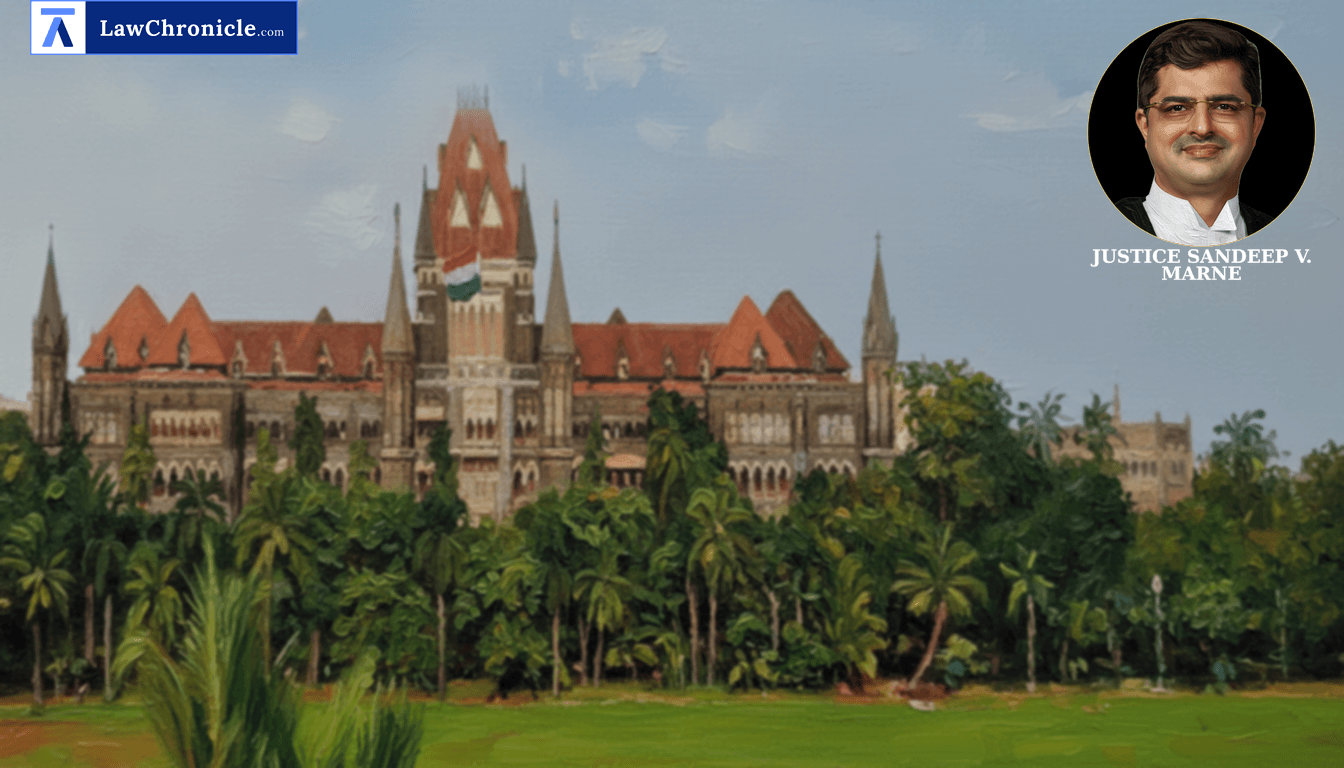
The Bombay High Court has struck a decisive blow against employees seeking to exploit administrative 'gap periods' for double pay revision benefits, ruling that a seven-fold jump in salary within three years constitutes a glaring error that warrants judicial review.
In a nuanced exercise of review jurisdiction, a single-judge bench of Justice Sandeep V. Marne reconsidered a previous order that had initially dismissed a challenge by the Maharashtra State Power Generation Company Limited. The Bench addressed whether an ex-serviceman who joined the establishment during the transition between the implementation of the 7th Pay Commission in the Army and the new pay structure in the state corporation could claim the benefit of pay revision twice.
Key Takeaways
Prevention of Unjust Enrichment
Ex-servicemen cannot claim fitment benefits of the 7th Pay Commission twice, once in military service and again in their re-employed civilian post, if they joined during a specific administrative gap period.
Scope of Review Jurisdiction
Courts have a duty to review and recall their own orders if new material demonstrates an 'error apparent on the face of record' that strikes at the root of the matter and causes serious financial impact.
Limits of Pay Protection
Pay protection is a shield meant to prevent salary loss upon re-employment, not a sword to secure pay scales equivalent to senior-most executive positions while working in lower-tier posts.
Protection Against Recovery
Even when pay is refixed downward due to administrative error, courts may shield employees from recovery of excess wages if the error was not of the employee's making and was realized by the employer after a significant delay.
Court Observations on 'Double Jump' Phenomenon
The Bombay High Court noted that the respondent-employee joined the petitioners on November 25, 2016, following his discharge from the Indian Army. Due to the timing of his joining, falling between the January 1, 2016, implementation of the 7th Pay Commission for the military and the April 1, 2018, implementation for the Power Company, he sought to apply the fitment formula at both stages.
The Bombay High Court highlighted that “In the peculiar facts of the present case, Respondent No. 2-employee has witnessed a steep increase in his pay, from Rs. 11,440/- drawn as Military Service Pay as on 31 December 2015 to Rs. 72,875/- with effect from 1 April 2018, in Petitioners' service. This high jumping has occurred on account of he receiving benefit of 7th Pay Commission recommendations in Military service thereby increasing his basic pay from Rs.11,440/- to Rs.37,300/-... He once again sought the benefit of revised pay fixation in the services of Petitioners as on 1 April 2018... This cannot be countenanced under any circumstances.”
Ratio
An error on the face of the record exists when an employee secures an undue benefit of double revision of pay by leveraging the timing of their appointment. Where discovery of new material establishes that a judgment resulted in a 'bonanza' not due or payable under law, the Court must exercise its power under Order 47 Rule 1 of the Code of Civil Procedure, 1908 to prevent miscarriage of justice and serious financial impact on the establishment.
Background
The Maharashtra State Power Generation Company Limited (MSPGCL) filed a review petition against the High Court's earlier order dated July 7, 2026, which had upheld an Industrial Court decision in favor of an employee. The employee, a Technician-III, had successfully challenged the Company's decision to refix his pay at Rs. 41,070, insisting instead on Rs. 72,875 based on Administrative Circular No. 449.
During the review, the Company produced new documents, including Government Notifications and General Orders, to prove that their new pay structure was a direct implementation of the 7th Pay Commission's fitment formula involving a 125% DA merger. The Company argued that since the employee had already received this 125% merger benefit while in the Army (which raised his military pay from Rs. 11,440 to Rs. 37,300), allowing it again in civilian service would lead to him drawing a salary equivalent to an Executive Engineer while working as a Technician-III.
The Bombay High Court relied on Rajender Singh vs. Lt. Governor, Andaman & Nicobar Islands ( "(2005) 13 SCC 289": 2005 CaseBase(SC) 143) and Neethu B. @ Neethu Baby Mathew vs. Rajesh Kumar ( "(2025) 10 SCC 436": 2025 CaseBase(SC) 988) to define the restrained but necessary use of review powers. While the respondent cited Sanjay Kumar Agarwal vs. State Tax Officer (1) & Anr. ( "2024 (2) SCC 362": 2023 CaseBase(SC) 393) to argue against re-adjudication, the Court found that the discovery of 'double benefit' changed the entire complexion of the matter. Consequently, the Bombay High Court set aside the Industrial Court's order but prohibited the Company from recovering excess payments already made to the employee.
Case Details:
Case No.: REVIEW PETITION NO.127 OF 2026 IN WRIT PETITION NO.7248 OF 2026
Neutral Citation: 2026:BHC-AS:45355
Case Title: The Maharashtra State Power Generation Company Limited & Ors. V/S The State of Maharashtra & Anr.
Appearances:
For the Petitioner(s): Mr. Suresh Pakale, Senior Advocate with Mr. Sagar Pawar and Ms. Nupur Bapat i/b KP Law Associates
For the Respondent(s): Mr. R.V. Sankpal with Dr. Chandrakant Ambilwade for Respondent No.2; Mr. P.G. Sawant, AGP for Respondent No.1/State
Source: 2026 CaseBase(BOM) 7161
Similar Articles


 Breaking News


