

Commercial Officer with Supervisory Duties Not a Workman under MRTU & PULP Act: Bombay HC
 Copy Link
 Share
Share Save
Save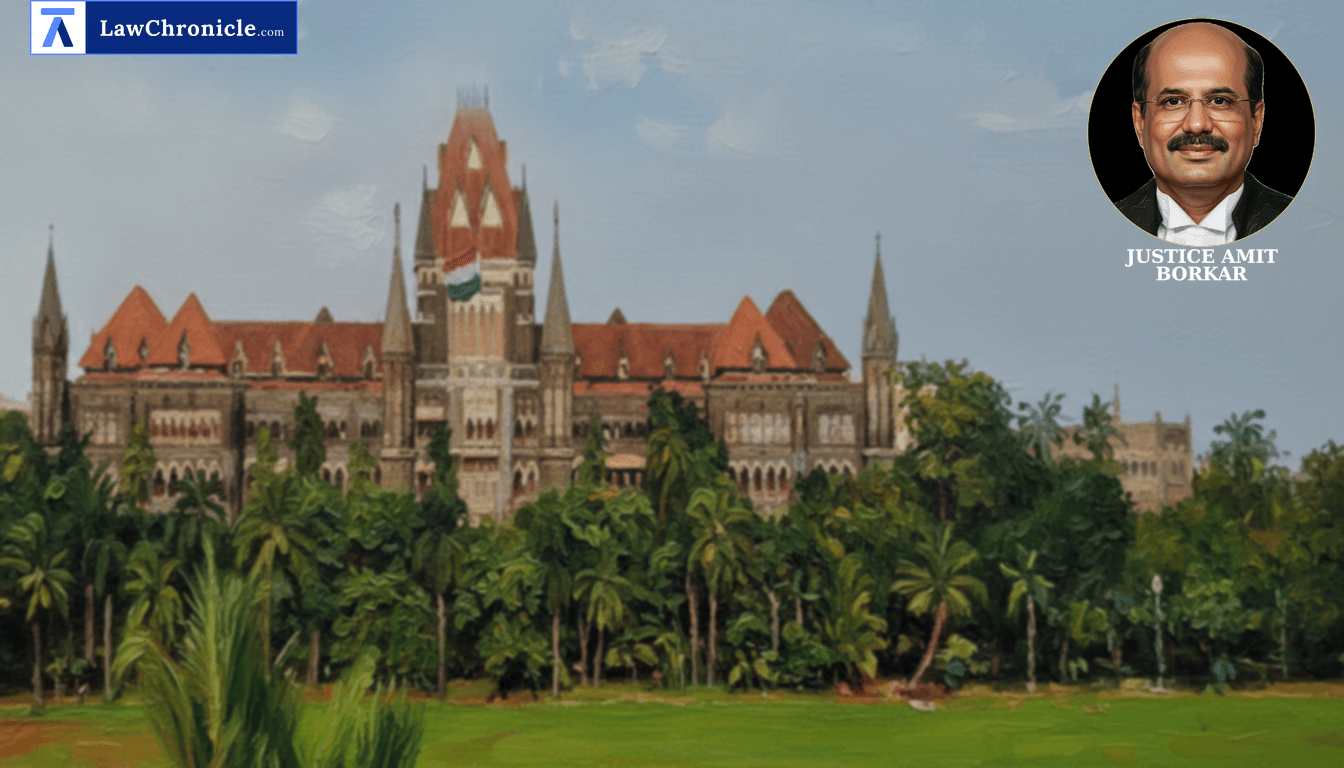
In a significant ruling, the Bombay High Court has clarified the distinction between clerical tasks and supervisory responsibilities, holding that an employee performing dominant administrative functions cannot be classified as a 'workman' under industrial law. The Court emphasized that the substance of duties, rather than the mere designation or occasional performance of clerical tasks, is the ultimate test for determining employment status.
Justice Amit Borkar, while hearing a challenge against the orders of the Industrial and Labour Courts, set aside the findings that had previously granted reinstatement and back wages to a former Commercial Officer. The Court meticulously analyzed the nature of responsibilities discharged by the respondent to conclude that his role carried a 'supervisory and administrative complexion.'
Dominant Nature of Duties vs. Incidental Clerical Work
The High Court observed that industrial adjudication must proceed on substance rather than labels. It noted that the respondent was functioning as the Head of the Packing Department, a position that carries inherent authority and control. The Court highlighted that the respondent was entrusted with independent responsibilities such as signing leave applications, corresponding with customers, and managing excise formalities.
The Court, in its reasoning, observed: "The predominant and principal nature of duties alone governs the issue. If every supervisory employee who performs incidental clerical work is treated as a workman, then the distinction recognized by industrial law between clerical staff and supervisory staff would practically disappear. That is not the legal position recognised by the statute or by judicial precedents."
Judicial Appreciation of Evidence and Interlocutory Finality
A key legal point addressed was whether the petitioner could challenge earlier remand orders that had attained a degree of finality during the litigation process. The High Court affirmed its supervisory jurisdiction under Article 226 of the Constitution of India and Article 227 of the Constitution of India, stating that procedural non-challenge at an intermediate stage does not bar the Court from examining findings that form the foundation of the final adjudication.
Referring to the legal principles established in H.R. Adyanthaya v. Sandoz (India) Ltd. and Arkal Govind Raj Rao v. Ciba Geigy of India Ltd., the Court reiterated that for a person to be an employee under Section 3(5) of the Maharashtra Recognition of Trade Unions and Prevention of Unfair Labour Practices Act, 1971, they must fall within the categories defined by Section 2(s) of the Industrial Disputes Act, 1947.
Background:
The dispute originated when Automatic Electric Limited terminated the services of the respondent, who was promoted to Commercial Officer in 2004. The Management alleged deficient services and loss of confidence, leading to a 'simpliciter termination.' The respondent filed a complaint under the Maharashtra Recognition of Trade Unions and Prevention of Unfair Labour Practices Act, 1971, alleging unfair labour practices.
Initially, the Labour Court dismissed the complaint, holding the respondent was not an 'employee.' However, after multiple rounds of revisions and remands between the Labour Court and the Industrial Court, the lower authorities eventually ruled in favor of the respondent, granting him back wages and benefits. The petitioner Company challenged these findings in the High Court, arguing that the respondent's duties including signing invoices, coordinating dispatches, and managing the Packing Department were clearly supervisory. The High Court agreed, ruling that the respondent failed to establish his status as a 'workman.'
Case Details:
Case No.: WRIT PETITION NO.1030 OF 2025
NeutralCitation: 2026:BHC-AS:22025
Case Title: Automatic Electric Limited Vs. Tukaram Mahadev Mejari
Appearances:
For the Petitioner(s): Mrs. Anjali Purav, Advocate
For the Respondent(s): Ms. Nivedita Deshpande, Advocate
Source: 2026 CaseBase(BOM) 218
 Breaking News