

Advocates Cannot Disclose Client Confidentiality On TV Even If Adversarial: SC
 Copy Link
 Share
Share Save
Save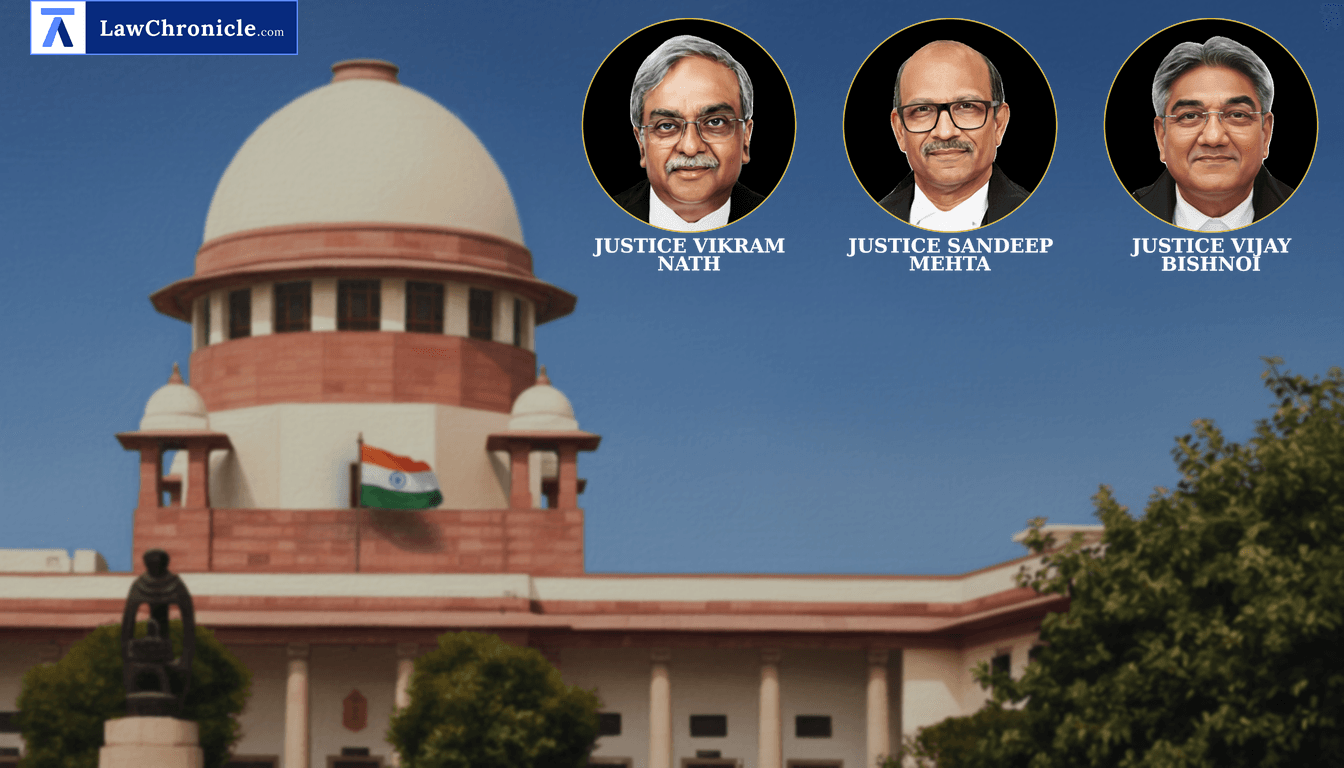
In a stern rebuke against breach of professional ethics, the Supreme Court ruled that an advocate cannot publicly disclose privileged communications or client confidences on media platforms, even if the client subsequently becomes an adversary or levels accusations against the lawyer.
A three-judge bench comprising Justice Vikram Nath, Justice Sandeep Mehta, and Justice Vijay Bishnoi dismissed cross-appeals challenging a decision of the Disciplinary Committee of the Bar Council of India that suspended an advocate's license for two years for televised disclosure of client confidences.
Key Takeaways
Absolute Privilege of Client Communications: An advocate's duty of confidentiality does not terminate or weaken if the client subsequently turns adversarial or lodges a criminal complaint against the lawyer.
No Trial by Media for Legal Feuds: Lawyers facing false accusations by former clients must seek legal remedies like defamation suits or police disclosures rather than airing privileged records on television channels.
Clean Hands Requirement for Enhancement: Litigants who suppress facts, engage in sensationalism, or fail to approach the Court with clean hands cannot seek enhancement of disciplinary penalties.
The Supreme Court strictly condemned the conduct of both the advocate and the former client, noting that both litigants engaged in suppression and embellishment while utilizing judicial machinery to settle personal scores.
The Court has following directions:
"The appellant and the respondent shall each pay costs of Rs. 5,00,000/- (Rupees Five Lakhs only) to be deposited with the Supreme Court Legal Services Committee within four weeks from today, failing which it shall be recovered in accordance to law."
The Court, in its reasoning, observed:
"An advocate’s duty is not conditional upon the client's continued good behaviour towards the advocate. An advocate cannot use information received in confidence against his client, and the fact that she has since become his adversary makes no difference. An advocate who considers himself falsely accused is not without remedies. He may place his version before the investigating agency... or he may sue in defamation. What he may not do is take his grievance to a television channel and there disclose privileged communications, play recorded conversations with his former client, and describe her complaint as a false case of rape while accusing her of seeking publicity."
Ratio
The statutory duty of confidentiality owed by an advocate under Section 35 of the Advocates Act, 1961 is absolute and non-conditional upon the client's subsequent conduct. A lawyer is legally prohibited from publicly disclosing privileged communications or client materials on public or broadcast media to counter accusations made by a former client.
Background
The complainant had engaged the advocate during 2013 and 2014 following disputes arising out of an alleged sexual assault by a senior police official. Later, on July 24, 2014, the complainant lodged an FIR under Sections 376(2), 376C, 354, and 354D of the Indian Penal Code, 1860 against the police official, in which the advocate was also named as a person acting under the official's influence.
Subsequent to being named, the advocate appeared on national television news channels on August 5, 2014, giving interviews wherein he disclosed details of his interactions with the client, played recorded conversations, and shared messaging exchanges, characterizing her complaint as false. The complainant subsequently filed a professional misconduct complaint under Section 35 of the Advocates Act, 1961 before the Bar Council.
The Disciplinary Committee of the Bar Council of India found the advocate guilty of professional misconduct, directing a two-year removal from the roll of advocates along with a fine. The advocate challenged the order claiming denial of natural justice and justification of self-defense, while the complainant appealed for enhancement of punishment to a permanent bar and monetary compensation. Dismissing all petitions, the Supreme Court affirmed the Bar Council's order and slapped Rs. 5 Lakhs costs on each party for wasting judicial time over an eleven-year manufactured feud.
Case Details:
Case No.: Civil Appeal No. 12256 of 2025
Neutral Citation: 2026 INSC 907
Case Title: Rehana Khan v. Rizwan Siddiquee
Appearances:
For the Petitioner(s): Ms. Rehana Khan (Appealing in Person)
For the Respondent(s): Mr. Adit S. Pujari, Advocate; Mr. P. V. Yogeswaran, Advocate (for BCI)
Source: 2026 CaseBase(SC) 820
 Breaking News